

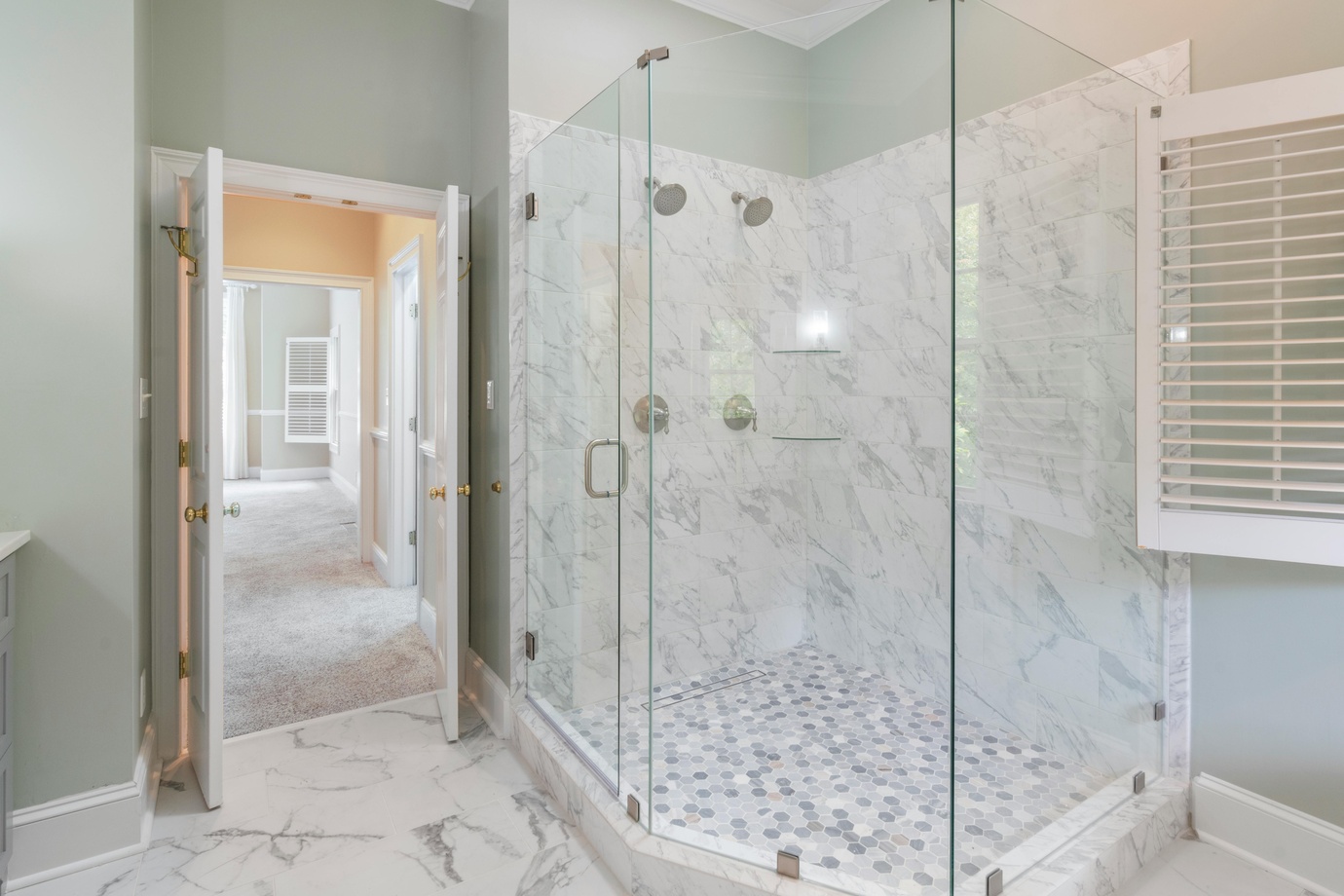
A home does not have to choose one flooring material and use it everywhere. In fact, combining tile and laminate can create a more purposeful design when each material is assigned to spaces where its visual and practical characteristics make sense.
The challenge is making the transition feel intentional.
Tile can create a distinctive foundation in kitchens, bathrooms, entrances, and other spaces where homeowners want a hard-surface finish with strong design flexibility. Laminate can then carry warmth and continuity into living rooms, bedrooms, dining spaces, and other areas where a wood-inspired appearance is desired.
The materials do not need to match.
They need to communicate.
One of the easiest ways to achieve that is through colour. A warm-toned laminate can pair naturally with tile carrying similar undertones. Neutral tile can create a quiet transition into a more expressive laminate floor.
The relationship between scale and pattern matters as well. If the tile has a strong geometric design, a calmer laminate may prevent the overall interior from becoming visually busy. Conversely, a very understated tile can provide room for a more distinctive wood pattern elsewhere.
Transitions should also be planned carefully.
A flooring change should occur where it makes sense architecturally. Doorways, room boundaries, kitchen transitions, and other natural divisions can provide logical points for one material to meet another.
Open-concept homes require a little more thought because multiple flooring surfaces may be visible at the same time. In these spaces, colour and undertone become particularly important.
There is also a practical reason to combine materials. Different rooms experience different conditions and demands. Instead of asking one flooring material to perform everywhere, homeowners can choose flooring based on how each area is used.
That creates a home where design and function work together.
For homeowners in Windsor and nearby communities such as Tecumseh, LaSalle, Leamington, and Kingsville, Marquis Tile can help explore tile and laminate combinations that create a cohesive flooring plan without making every room look identical.
A well-designed home does not need every surface to match. Sometimes, the most sophisticated interiors are created when different materials have their own personalities—but still know how to speak to one another.


